If you’ve come across plantable seed paper recently on a wedding invitation, a sympathy card, or a business promotion, you may have wondered how it actually works, and how it differs from the paper you’d find at any stationery shop. The short answer is that the materials, the process, and the end result are all quite different. Here’s a straightforward look at what sets seed paper apart.
What Traditional Paper Is Made From
Most commercially produced paper is made from wood pulp: trees that are processed, bleached, and manufactured at scale. The result is a consistent, smooth product that prints cleanly and comes in a wide range of weights and finishes. It’s practical and widely available, but the production process is resource-intensive, and the paper itself has no life beyond its original use.
What Seed Paper Is Made From
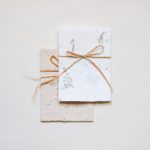
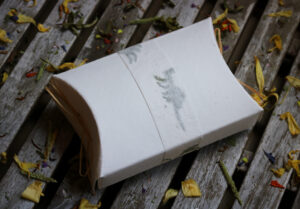
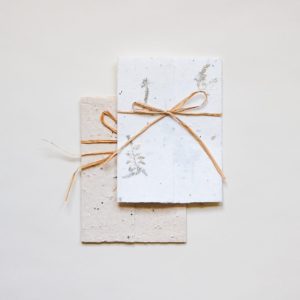
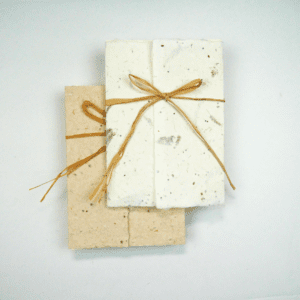
Seed paper starts with an entirely different set of materials. At Cast Paper Art, our seed paper is made from recycled cotton fibers combined with water to create a pulp. Wildflower seeds are embedded directly into that pulp during the papermaking process, so they become part of the sheet itself rather than being applied to the surface afterward.
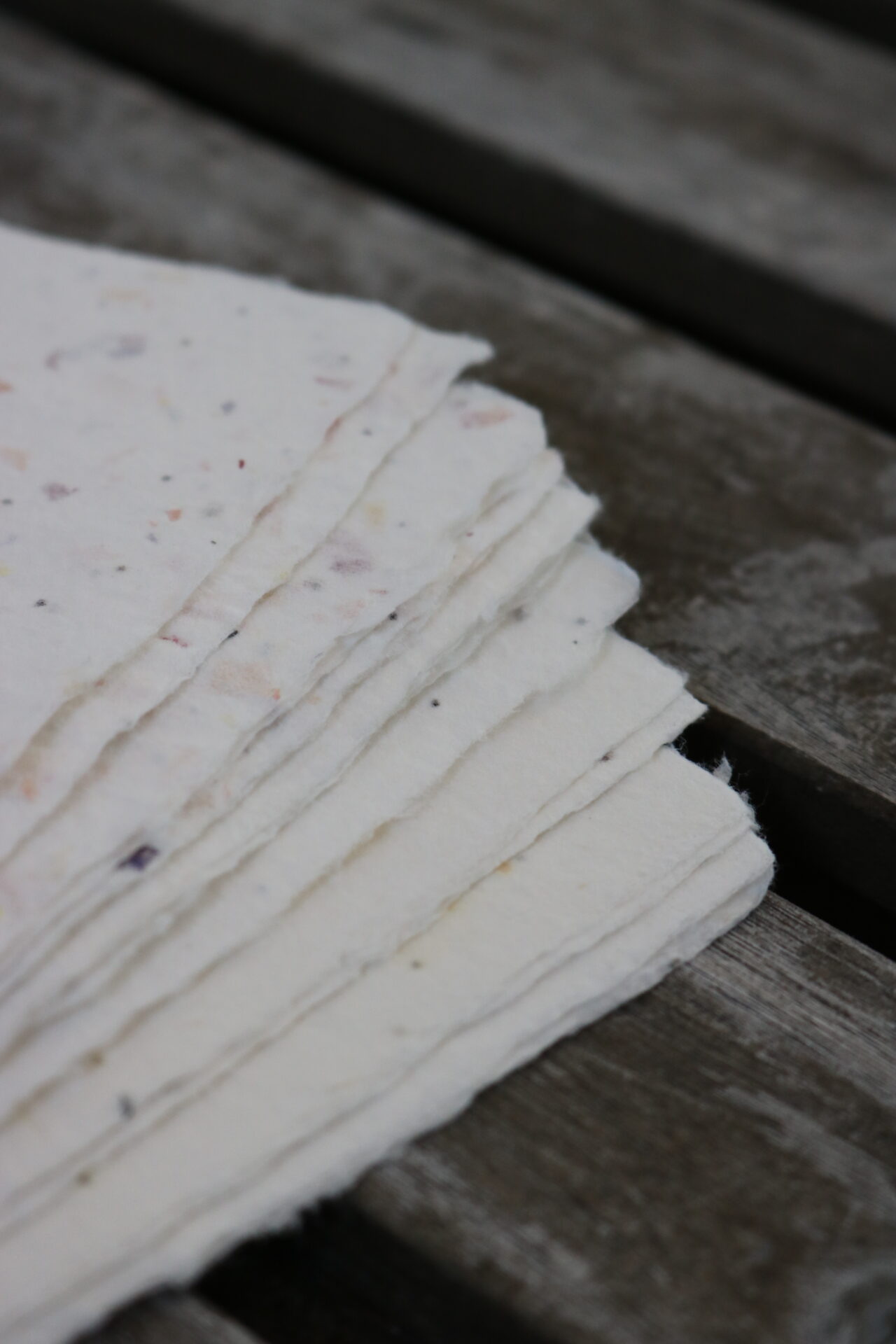
The paper is formed by hand, pressed, and air dried. No two sheets are identical. The texture is softer and more varied than commercial paper, and the embedded seeds are often visible as small flecks throughout the sheet.
What Happens When You Plant It
Once the paper has served its original purpose as an invitation, card, or favor tag, it can be planted directly in soil. The paper breaks down naturally, and the seeds germinate and grow. Cast Paper Art’s seed paper is embedded with 12 varieties of perennial wildflower seeds, meaning the plants that grow will return year after year.
The planting process is straightforward: tear or cut the paper into pieces, press it into prepared soil, cover lightly, and water regularly. No special equipment or gardening experience required.
How They Compare for Printing and Design
Traditional paper has a clear advantage for high-volume, precision printing. Its smooth, consistent surface is well suited to commercial printing processes and works predictably across different ink types.
Seed paper has a more organic look and feel. Its natural texture and slight variation give printed pieces a handcrafted quality that works well for certain design styles — particularly those that lean toward natural, botanical, or artisan aesthetics. It prints cleanly but has a character that sets it apart from standard stationery stock.
For couples, businesses, or organizations that want their printed materials to reflect a commitment to sustainability or craftsmanship, that distinction can be part of the appeal.
Why It Matters Beyond the Environmental Angle
Sustainability is one reason people choose seed paper, but it’s not the only one. There’s also a practical consideration: seed paper gives recipients something to do with a piece of mail or a keepsake that would otherwise be set aside and forgotten. An invitation that becomes a garden, or a sympathy card that grows into wildflowers, has a second chapter that standard paper simply doesn’t offer.
For businesses and organizations, that extended lifespan means your brand or message stays present longer in someone’s windowsill, garden bed, or yard, rather than ending up in a recycling bin the week after it arrives.
The Craft Behind It
Mass-produced paper is engineered for consistency. Handmade seed paper is made one sheet at a time, which means the person making it is present at every step. At Cast Paper Art, that process has been refined over 25 years.
If you’re considering seed paper for a wedding, event, business outreach, or personal stationery, understanding what goes into it makes it easier to decide whether it’s the right fit. We’re happy to answer questions or send samples if you’d like to see and feel the difference firsthand.